Tonewoods for Electric Guitars: How Wood Choice Affects Sound and Feel
Few topics in the guitar world generate as much debate as tonewood—especially when it comes to electric guitars. Players often ask whether wood choice truly affects tone, or if its importance has been overstated over time.
At Doubleday Guitars, the belief is simple: while wood choice can play a role, craftsmanship, electronics, amplifiers, and the player themselves have a far greater impact on how an electric guitar ultimately sounds and feels. This guide explains how tonewoods factor into electric guitar builds, what actually matters most, and how to make informed decisions when commissioning a custom instrument.
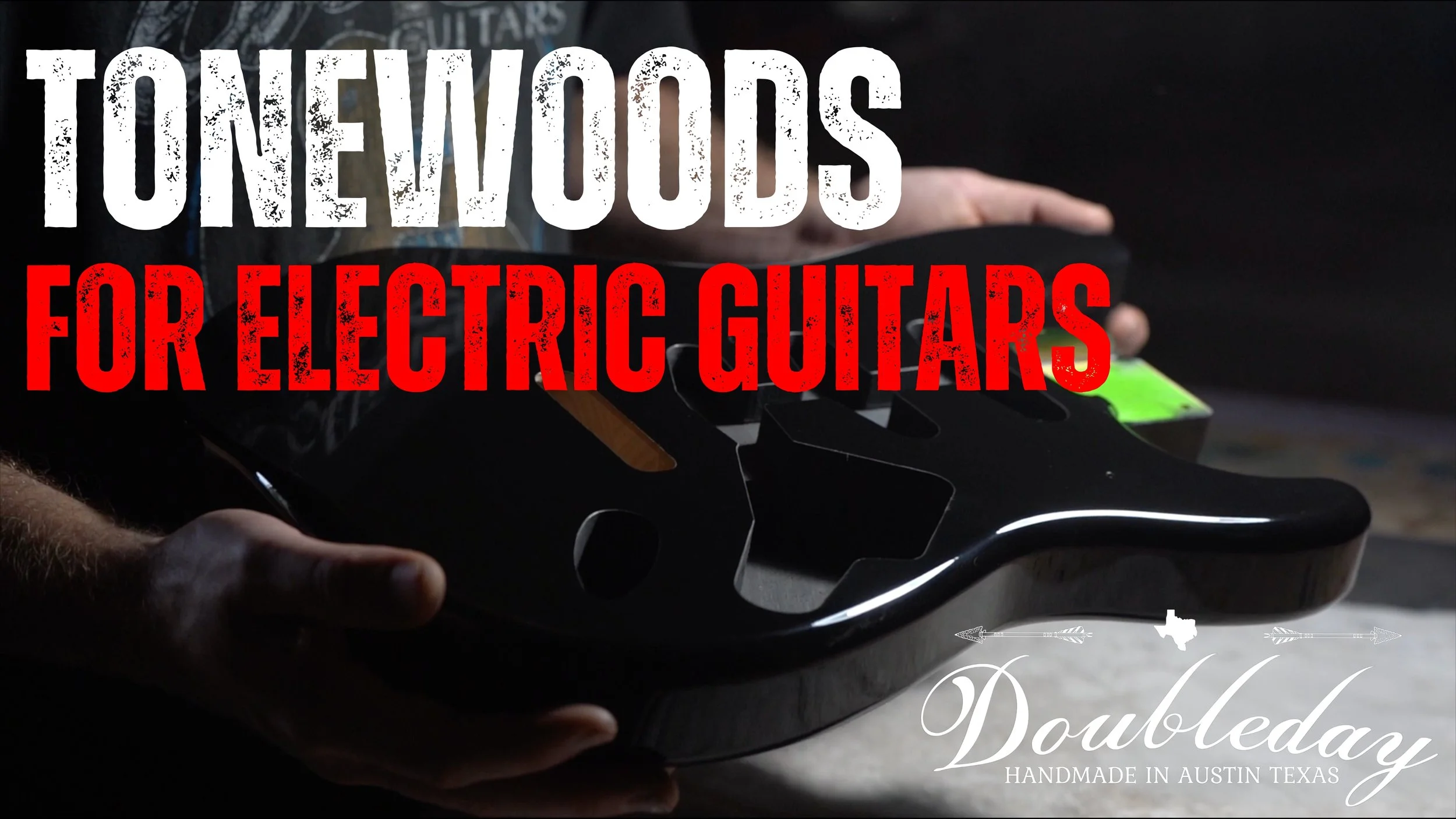
Does Tonewood Matter on Electric Guitars?
Many would argue that tonewood makes a significant difference in electric guitars. While it can influence resonance and feel to a degree, its impact is often secondary to factors like:
Overall build quality
Neck construction
Pickup selection
Electronics and wiring
Amplifier choice
Player technique
In an electric guitar, sound is primarily shaped by the interaction between the strings, pickups, and electronics. A well-built instrument with thoughtful construction will outperform a poorly built one regardless of wood species.
This is why Doubleday Guitars places greater emphasis on quality of craftsmanship rather than chasing specific tonal myths tied to wood alone.
Common Electric Guitar Body Woods
While tone may not be the primary reason for selecting a wood species, wood choice still matters for weight, stability, durability, and aesthetics.
Common body woods used in electric guitars include:
Alder
Alder is lightweight and consistent, making it a popular choice for balanced instruments. It provides a neutral platform that pairs well with a wide range of pickups and finishes.
Ash
Ash is often chosen for its pronounced grain structure and visual character. Weight can vary, so it’s typically selected carefully depending on the desired feel of the instrument.
Mahogany
Mahogany is valued for its stability and durability. It tends to be heavier and is often chosen for instruments where weight balance and sustain are considerations.
Maple
Maple is commonly used as a top or neck wood rather than a full body. Its density and tight grain make it ideal for structural components and certain finish applications.
Paulownia
Paulownia is selected for its unique grain patterns and workability. It offers visual interest while maintaining good structural characteristics.
Sassafras
Sassafras is lightweight with an open grain, making it well-suited for specific finishes. It’s often chosen when weight reduction is a priority.
Alder vs Ash vs Mahogany: What Actually Matters?
Rather than focusing on tonal differences, these woods are typically selected based on:
Weight – how the guitar balances and feels over long playing sessions
Grain structure – how the wood accepts stains, transparent finishes, or solid colors
Stability – how well the wood holds up over time
At Doubleday Guitars, alder, ash, and mahogany are used primarily for their weight and grain characteristics, not because one is assumed to sound better than another.
Grain Structure and Finish Options
Grain structure plays a major role in how a guitar can be finished. Open-grain woods may require grain filling, while tighter-grain woods allow for smoother, more uniform finishes.
Wood choice affects:
Whether a finish can be transparent or opaque
How much prep work is required
How the finish will age over time
Understanding how grain interacts with finish materials helps ensure the final instrument looks and wears as intended.
How to Choose Tonewood for a Custom Electric Guitar
When commissioning a custom electric guitar, wood selection should be guided by:
Desired weight and balance
Visual preferences
Finish style
Long-term durability and stability
In electric guitars, aesthetics often play a larger role than tonal characteristics when choosing wood species. A builder’s experience in pairing wood, finish, and construction techniques matters far more than the species alone.
For players exploring one-off instruments, the full process—including wood selection and finish options—is outlined on our custom electric guitar builds page.
Why Craftsmanship Matters More Than Wood Species
Two guitars made from the same species can feel completely different. Precision in neck construction, fretwork, electronics installation, and final setup all have a greater influence on performance than wood choice alone.
Experience with professional guitar repair and setup services reinforces this perspective, as long-term wear and stability often reveal that build quality—not wood mythology—is what truly defines a great instrument.
Final Thoughts
Tonewood can influence the feel and appearance of an electric guitar, but it is not the defining factor in sound quality. In electric instruments, craftsmanship, component selection, and player interaction shape tone far more than the species of wood used.
Choosing tonewood with an understanding of weight, stability, grain structure, and finish compatibility leads to better long-term results than chasing tonal assumptions alone.
Looking for a handcrafted guitar built in Austin? Explore our Custom Guitar Builds.
Ready to design your own guitar?