Custom Guitar Setup Basics: Action, Intonation, and Neck Relief Explained
A proper guitar setup can completely change how an instrument feels and plays. Many common complaints—buzzing strings, high action, or notes sounding out of tune higher up the fretboard—are usually signs that a setup is needed, not that the guitar itself is flawed.
This guide explains the fundamentals of guitar setup, including action, intonation, and neck relief, how they work together, and why professional setups consistently outperform DIY adjustments.
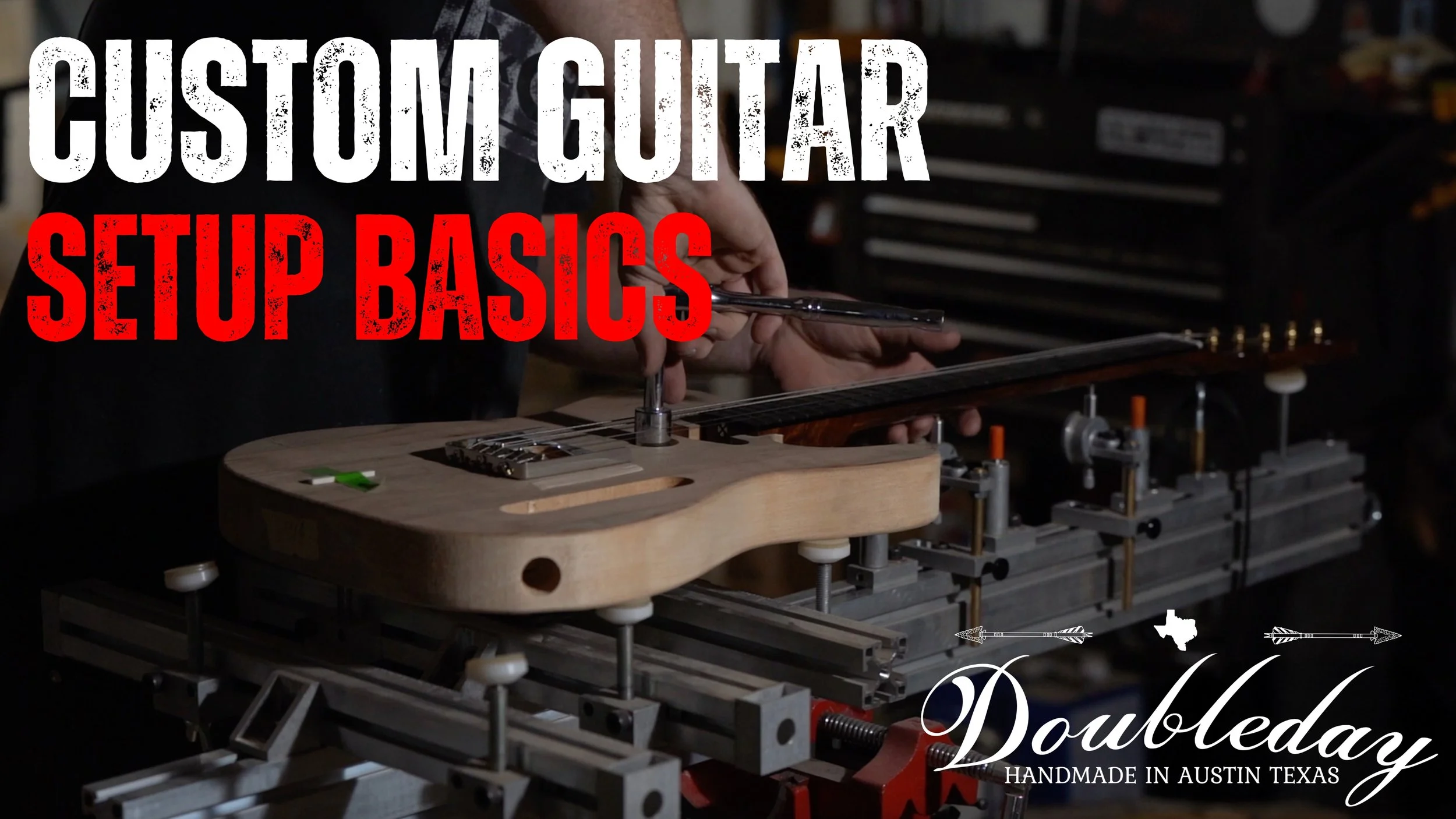
What Is Guitar Action?
Guitar action refers to string height above the frets, typically measured at the twelfth fret. Action affects both comfort and playability.
High action can make a guitar feel stiff and fatiguing
Low action can improve speed and comfort, but may cause buzzing if not set correctly
The goal of a proper setup is to achieve the lowest playable action possible without introducing unwanted string buzz or loss of clarity.
What Is Intonation (and Why It Matters)?
Intonation is often misunderstood. It’s not simply tuning the strings to pitch.
Intonation refers to saddle placement, which ensures that the octave of an open string rings true to itself as you move up the fretboard. If intonation is off:
Chords may sound in tune near the nut but sharp or flat higher up
Single notes lose accuracy as you move toward higher frets
Correct intonation balances scale length, string gauge, and saddle position so the guitar plays in tune across the entire neck.
How Neck Relief Affects Playability
Neck relief is the slight forward bow intentionally built into a guitar neck. Having the correct amount of relief allows the strings to vibrate freely while keeping action as low as possible.
Proper neck relief:
Reduces fret buzz
Improves consistency across the fretboard
Allows for comfortable action without sacrificing clarity
Too much relief can raise action unnecessarily, while too little can cause buzzing and dead spots. This balance is critical—and highly dependent on string tension, playing style, and neck construction.
Signs Your Guitar Needs a Setup
Common indicators that a setup is needed include:
Persistent string buzzing
Action that feels unusually high or uncomfortable
Notes sounding out of tune as you move up the fretboard
Difficulty maintaining tuning stability
Uneven feel from one area of the neck to another
These issues are often interconnected and rarely solved by adjusting just one component.
What Makes a Professional Guitar Setup Different?
A professional setup accounts for every variable in the system. Action, relief, intonation, nut height, fret condition, string gauge, and playing style all affect one another.
Adjusting one element without understanding its relationship to the others can create new problems. For example:
Lowering action without correcting relief can cause buzzing
Adjusting intonation without addressing nut height can lead to inconsistent tuning
Changing string gauges without a full setup can throw everything off
Professional technicians understand how each adjustment affects the entire instrument.
Experience with professional guitar repair and setup services provides insight into how instruments behave over time and how to achieve consistent, reliable results without compromising playability.
Setup Considerations in Custom Guitar Builds
In a custom build, setup is not an afterthought—it’s part of the design process. Neck construction, fretwork, scale length, and hardware choices all influence how a guitar can ultimately be set up.
When commissioning an instrument, setup preferences should be considered alongside construction decisions. The relationship between neck geometry and final playability is a core part of the process outlined on our custom electric guitar builds page.
Final Thoughts
A proper guitar setup isn’t just about measurements—it’s about balance. Action, intonation, and neck relief must work together to create an instrument that feels natural, plays cleanly, and stays in tune across the fretboard.
Understanding how these elements interact explains why professional setups consistently outperform DIY attempts. When every variable is accounted for, the result is a guitar that plays its best every time you pick it up.
Looking for a handcrafted guitar built in Austin? Explore our Custom Guitar Builds.
Ready to design your own guitar?